Expanding Titanium and Thin-Wall Tubes with Servo Tube Rolling
How to expand titanium and thin-wall tubes: trial rolling against wall reduction, constant-torque servo rolling, tube end preparation and checks on each joint.
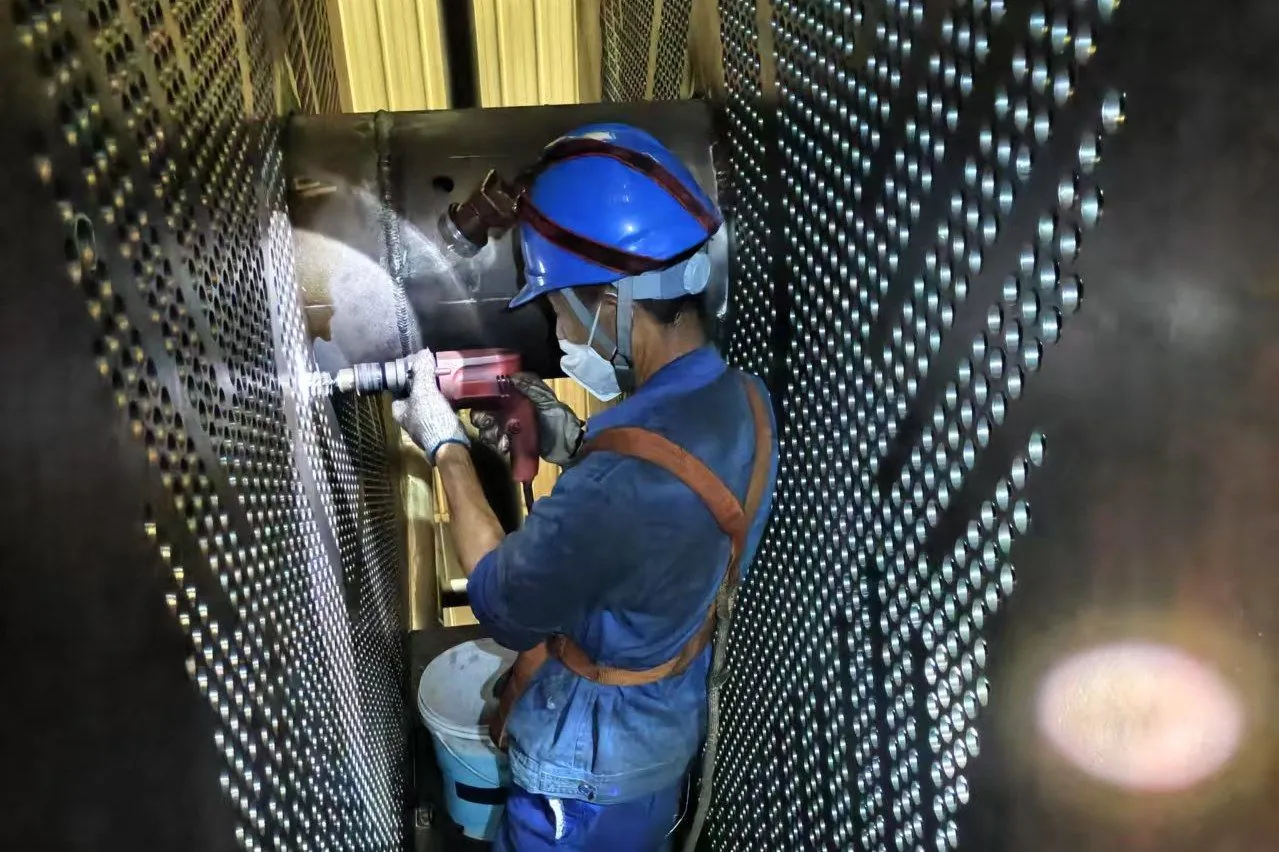
Titanium and thin-wall tubes are common in seawater-cooled condensers and in heat exchangers where corrosion resistance matters. They are also less tolerant of rolling errors than copper-alloy or thick-wall steel tubes. The window between an underrolled joint that may leak and an overrolled joint with a thinned, work-hardened or cracked tube wall is narrow. This article covers how to set up and control the expansion of these tubes.
Why titanium and thin-wall tubes are sensitive
Titanium
Titanium has relatively high strength and a lower elastic modulus than steel, so it springs back more after rolling. It work-hardens and can gall against tool surfaces if the expander is dry or worn. If the torque is too high, the wall is overthinned and the tube may crack at the transition between rolled and unrolled zones; too low, and the tube springs back from the hole and the joint may not seal.
Thin-wall tubes
With a thin wall, a small change in torque produces a large change in wall reduction. Variations that would be acceptable on a thicker tube — a few percent of torque from voltage swings or operator technique — can push a thin-wall joint out of its required range.
For both cases, the two requirements of rolled-joint quality become critical: repeatability (the same torque on every joint) and traceability (a record of every joint).
Step 1: Set the torque by trial rolling
There is no universal torque for titanium or thin-wall tubes. The torque is set by trial rolling for the tube material, OD, wall and tubesheet against the required wall reduction:
- Make a mock-up with the same tubesheet material, hole size and thickness, using tubes from the job batch.
- Measure hole ID, tube OD and tube ID before rolling.
- Roll at a conservative starting torque and increase in small steps.
- Measure tube ID after each trial and calculate wall reduction.
- Section or inspect trial joints as your procedure requires, looking for cracking or excessive thinning at the roll transition.
- Record the accepted torque together with expander type, roll length and speed.
Use the same expander, extensions and roller on the mock-up as on the job.
Step 2: Prepare tubes and holes carefully
Preparation affects titanium joints as much as torque:
- Clean tubesheet holes so oil, scale and burrs do not change friction or contact.
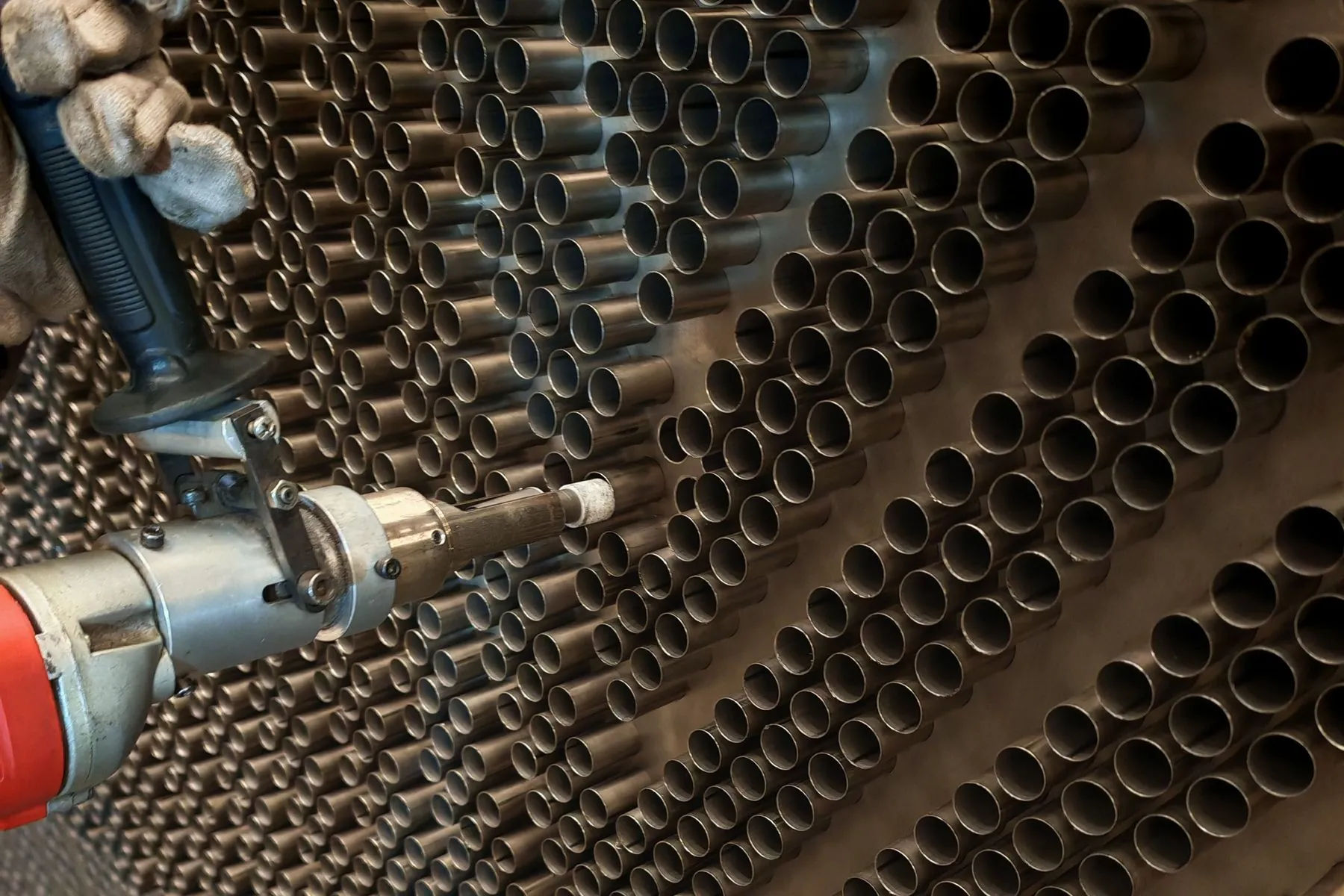
- Face tube ends cleanly. GXD-A / GXD-B tube end facing tools work on copper, titanium and stainless tubes Φ12–Φ57 mm; for titanium they should be driven by a 200 rpm low-speed electric or air drill.
- Keep the expander in good condition and lubricated as recommended, to reduce galling inside the tube.
Step 3: Roll at constant torque with a servo system
A conventional electric roller cut off by current or a mechanical clutch can overshoot when speed or supply voltage changes. On titanium and thin-wall tubes that overshoot is enough to move a joint out of range.
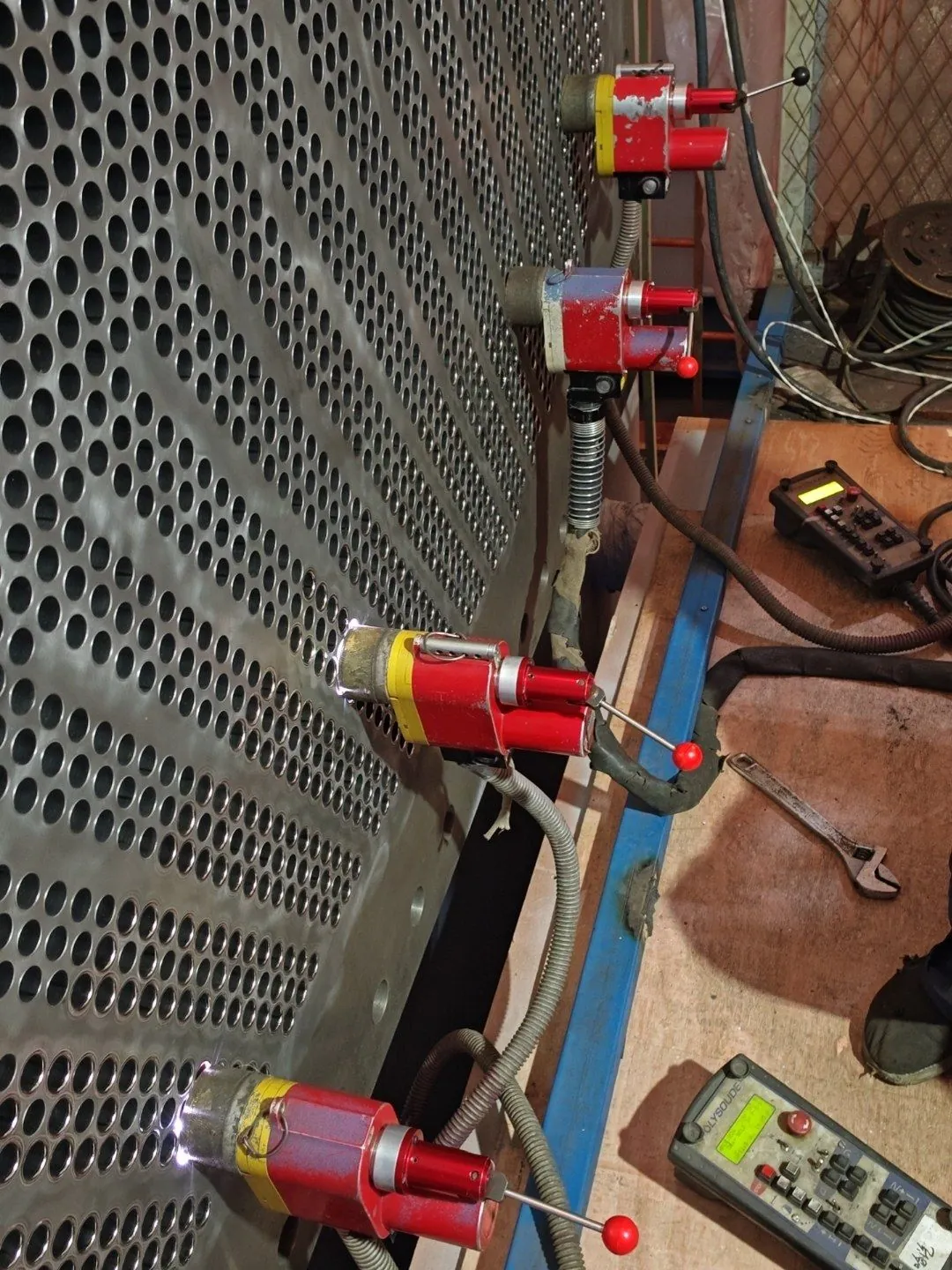
Lanbo's SR Series servo tube rolling system (0.2–77.9 N·m, tube OD 6.35–38.1 mm) holds constant torque at any speed. The SRD dual servo motor system does the same with two motors over a 1500 × 1800 mm working window, which suits large condenser tubesheets. For larger tubes, the XR Series covers 5–300 N·m and tube OD φ12.7–φ101.6 mm.
Because the torque does not depend on speed, the operator can work at a productive speed without changing the delivered torque.
Record every joint
SR, SRD and XR systems record every joint. With Lanbo's software the records can be imported directly into the customer's MES, so the rolling of each titanium tube is traceable in the plant's own system.
Step 4: Verify the tool and the joints
- Check roller torque before the job and at intervals with a TQM Series dynamic torque tester, which measures torque while the roller runs (0.4–500 N·m, four models).
- Spot-check tube ID after rolling against the trial-rolling values. At intermediate tubesheets, a tube ID gauge for rolled joints measures tube ID at three points.
- Leak-test according to the plant procedure.
Lanbo tools for this job
- SR Series Servo Tube Rolling System — constant torque at any speed, per-joint records
- SRD Dual Servo Motor Tube Rolling System — two motors for large tubesheets
- TQM Series Dynamic Torque Tester — checks roller torque in operation
- GXD-A / GXD-B Tube End Facing Tools — facing titanium tube ends
- Tube ID Gauge for Rolled Joints — post-rolling tube ID checks
For a recommendation on roller, expander and trial-rolling setup, send us the tube material and grade, tube OD × wall, tubesheet material and thickness, and the required wall reduction. Request a quote.
FAQ
What torque should be used for titanium tubes?
There is no universal value. Set the torque by trial rolling on a mock-up with the actual titanium tubes and tubesheet material, measuring tube ID before and after rolling against the required wall reduction.
Why use a servo system for thin-wall tubes?
On thin walls, small torque differences cause large changes in wall reduction. A servo system holds constant torque at any speed and records each joint, which keeps joints within the range found by trial rolling.
How should titanium tube ends be faced?
GXD-A / GXD-B facing tools handle titanium tubes Φ12–Φ57 mm. For titanium, drive them with a 200 rpm low-speed electric or air drill.
Can titanium joint records go into our quality system?
Yes. SR, SRD and XR records can be imported directly into the customer's MES with Lanbo's software.