Tube-to-Tubesheet Joint Traceability: Per-Joint Records and MES
How servo tube rolling systems record every tube-to-tubesheet joint and how the records can be imported into a plant MES for traceability of expanded joints.
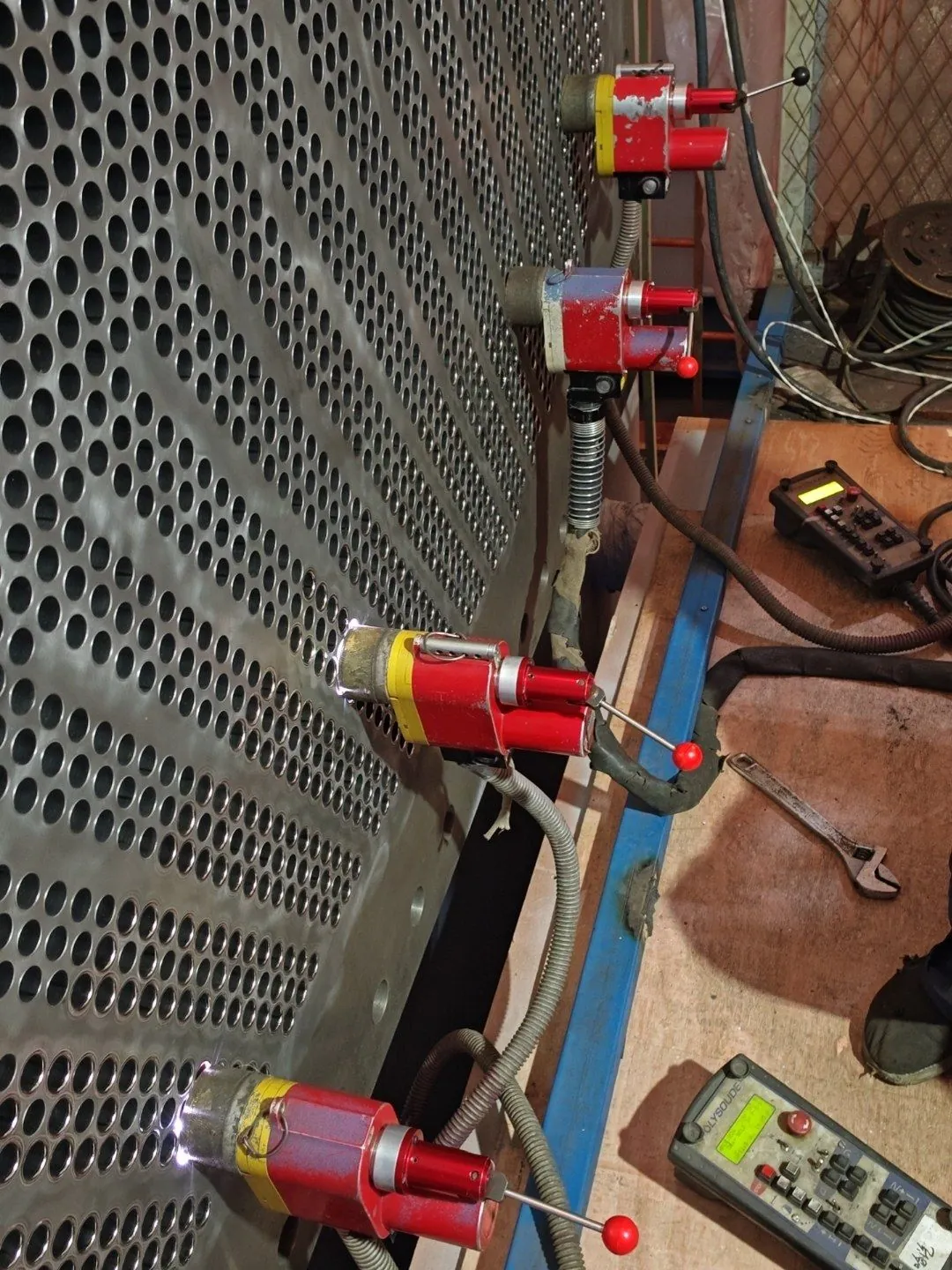
A heat exchanger or condenser may have thousands of tube-to-tubesheet joints, rolled over days by several operators. When a joint leaks in service, the first questions are: how was that joint rolled, with what torque, by which tool, and when? Without a per-joint record, nobody can answer. Traceability of expanded joints means being able to answer those questions for any tube on the tubesheet.
Why traceability matters for expanded joints
Rolled-joint quality comes down to two things:
- Repeatability — the same torque on every joint, regardless of speed, voltage or operator.
- Traceability — a record of every joint, so that the rolling of any individual tube can be checked afterwards.
Repeatability is what makes the joints good; traceability is what lets you show they are good, and find the cause quickly when one is not. For manufacturers, it supports quality documentation for the end customer. For plant owners and service contractors, it shortens leak investigations and helps separate rolling problems from material or operating problems.
What a manual record misses
On many jobs the "record" is a tubesheet map ticked off by hand and a note of the torque setting at the start of the shift. This shows which tubes were rolled but not how. It cannot show whether a joint was cut off early, whether the roller drifted after a voltage drop, or whether a tube was rolled twice. Paper records are also slow to search and easy to lose.
Per-joint records from servo tube rolling systems
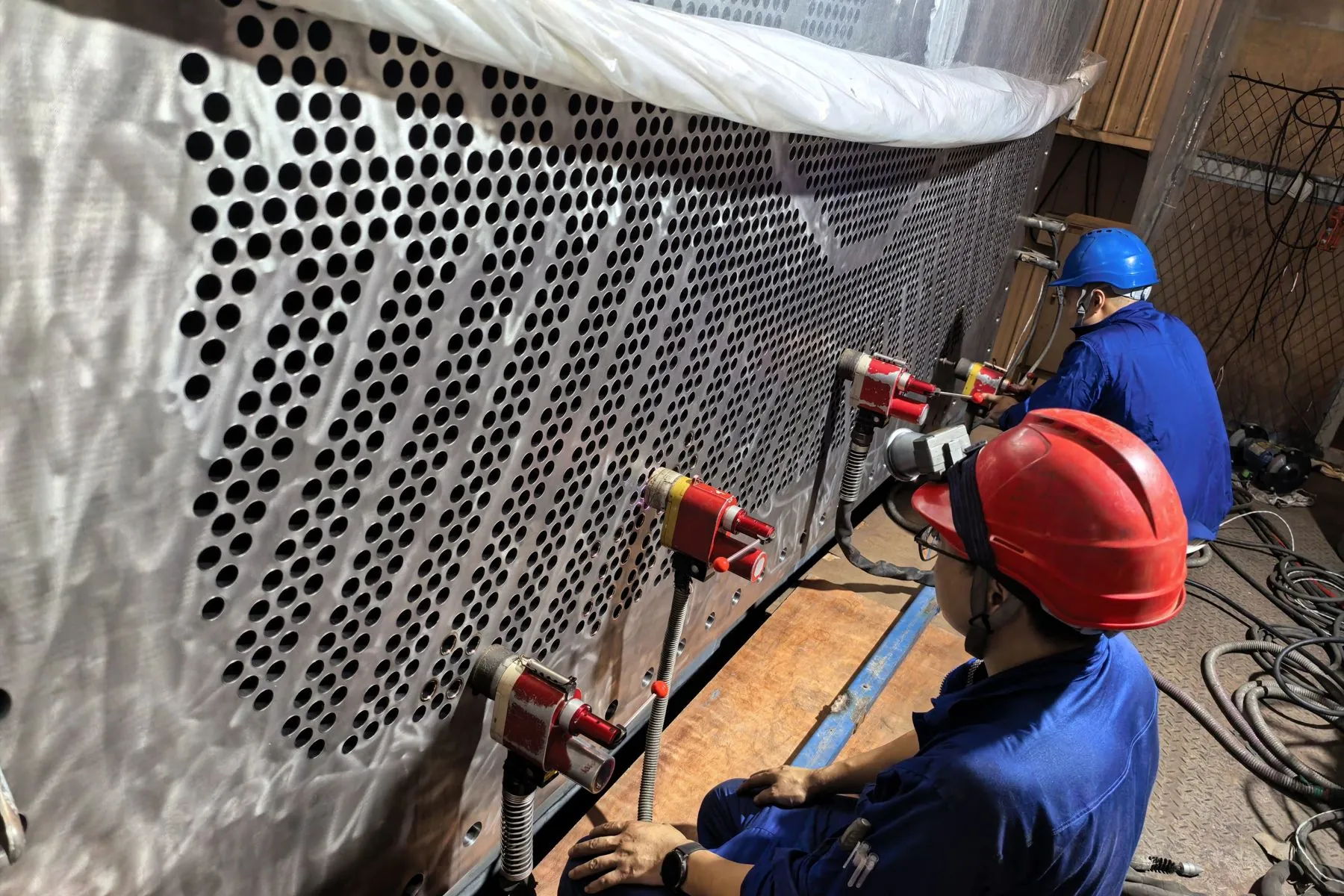
Lanbo's SR Series servo tube rolling system, SRD dual servo motor system and XR Series high-torque servo tube roller hold constant torque at any speed and record every joint as it is rolled. The record is produced by the same controller that controls the torque, so it reflects what the tool did rather than what someone wrote down.
| System | Torque range | Tube OD | Notes |
|---|---|---|---|
| SR Series | 0.2–77.9 N·m | 6.35–38.1 mm | 200–240 V single-phase |
| SRD | 0.4–77.9 N·m | 6.35–38.1 mm | Two servo motors, 1500 × 1800 mm working window |
| XR Series | 5–300 N·m | φ12.7–φ101.6 mm | Telescopic shaft, 1000 × 1000 mm working window |
For jobs using electric rollers, the ES2 Series electric tube roller also keeps rolling records on its touch screen.
Integrating joint records with the plant MES
A record that stays inside the rolling machine is useful; a record that sits in the plant's own system is more useful. With Lanbo's software, records from SR, SRD and XR systems can be imported directly into the customer's MES (manufacturing execution system). Data recording and traceability are then handled in the system the plant already uses for other production and quality data, alongside the work order, the equipment and the inspection results.
Planning the integration
Before the job, it helps to agree:
- Joint identification — how tubes are numbered on the tubesheet map, so each record links to one position.
- Which data fields the MES needs and in what format; confirm these with Lanbo for your system.
- Who imports the data and when — at the end of each shift or at the end of the job.
- How rejected or re-rolled joints are marked, so the final record shows the joint as accepted.
Adding tool checks to the record
A torque record is stronger when the tool itself has been checked. The TQM Series dynamic torque tester measures roller torque while it runs (0.4–500 N·m, four models) and saves results on a PC through RS485. Keeping these check records with the joint records shows that the reported torque was the delivered torque.
Setting the torque that gets recorded
Recording is meaningful when the set torque is right. There is no universal torque: it is set by trial rolling for the tube material, OD, wall and tubesheet, measured against the required wall reduction. The trial-rolling data — measured hole ID, tube ID before and after, and calculated wall reduction — belongs in the same job file as the production records.
Lanbo tools for this job
- SR Series Servo Tube Rolling System — per-joint records, MES import with Lanbo software
- SRD Dual Servo Motor Tube Rolling System — two motors on one working window
- XR Series High-Torque Servo Tube Roller — 5–300 N·m with per-joint records
- TQM Series Dynamic Torque Tester — tool torque checks with saved records
Tell us the tube material, tube OD × wall, tubesheet thickness, the number of joints and which MES your plant uses, and we will propose a servo system and a data-import arrangement. Request a quote.
FAQ
Which Lanbo systems record every joint?
The SR, SRD and XR servo systems record every joint; their records can be imported into the plant MES with Lanbo's software. The ES2 electric roller also keeps rolling records.
Does traceability replace trial rolling?
No. Trial rolling sets the correct torque for the tube and tubesheet against the required wall reduction. Traceability then shows that this torque was applied on every joint.
Can records be imported into our existing MES?
With Lanbo's software, SR, SRD and XR records can be imported directly into the customer's MES. The data fields and format should be agreed with Lanbo for your specific system before the job.
How do we show the rolling tool was working correctly?
Check the roller with a TQM dynamic torque tester before and during the job and keep the saved test records with the joint records.